Research-informed psychiatry · Ages 5 and older

Complex symptoms need a doctor who sees the whole story.

Family-centered psychiatric care for children, adolescents, and adults—especially when diagnoses overlap, previous care has not helped enough, or the next step is unclear.

Research-minded. Family-centered. Deeply human.

Prefer to talk? Call (516) 522-0410
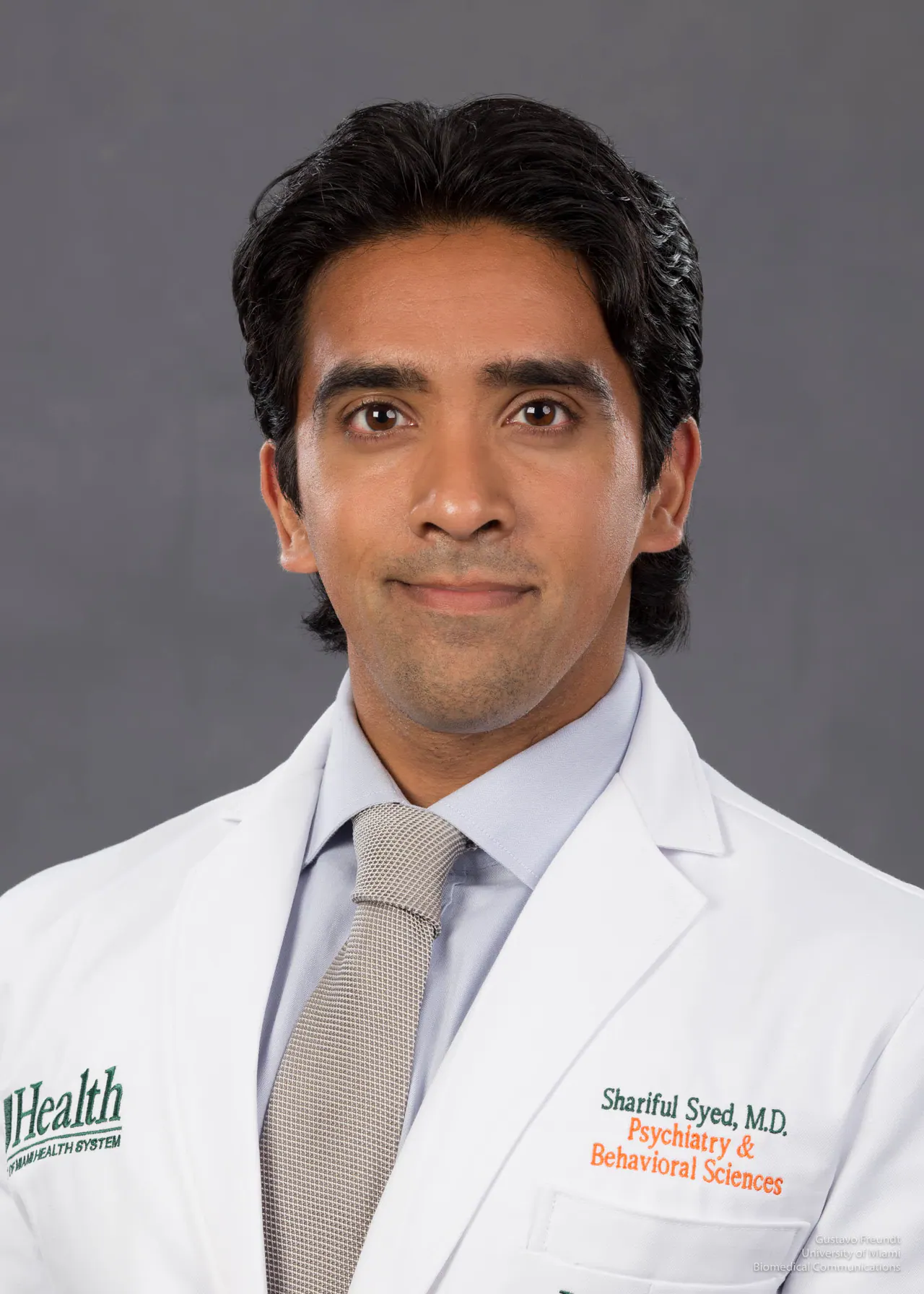
Shariful A. Syed, MD
Psychiatrist · Physician-researcher
Yale School of MedicineResearch fellowship
Ages 5 and olderChildren, teens & adults
New York & ConnecticutPrimarily online care
Free 30-minute consultationA clear first conversation

A diagnosis can name a pattern. It cannot tell the whole story of a person, a family, or what becomes possible with the right support.

When symptoms overlap, the right questions matter.

Dr. Syed connects symptoms to development, stress, relationships, learning, biology, and daily life. The goal is a plan with reasons behind it—not another label added to the list.

See the whole context

What looks like defiance, inattention, withdrawal, or anxiety means something different at each age. Evaluation starts with the person, family, school, relationships, and life history.

Find the pattern

ADHD, autism, anxiety, depression, bipolar disorder, sleep, and stress can influence one another. Careful diagnosis asks what is primary, what is overlapping, and what may be getting missed.

Build the next step

Therapy, family work, medication, and practical changes are considered together, with clear goals and honest attention to what is—or is not—helping.

For cases that do not fit neatly into one box.

People rarely arrive with only one concern. These are reasons to begin a conversation—not a checklist that can diagnose anyone online.

Children and adolescents · Ages 5+

  • Anxiety & school avoidanceWorry, panic, physical distress, withdrawal, or difficulty attending school
  • ADHD & executive functionAttention, impulsivity, organization, and learning
  • Autism & developmental differencesCommunication, regulation, identity, and family support
  • Mood & behaviorDepression, possible bipolar disorder, irritability, anger, or rapid change

Adults whose treatment has stalled

Depression that has not improved enough, persistent anxiety, trauma, attention concerns, substance use, major transitions, or uncertainty about an earlier diagnosis.

Families carrying the system

Psychiatric illness affects caregivers, schools, and relationships. Dr. Syed's approach makes the family and larger environment part of the clinical picture when appropriate.

Request a free 30-minute consultation

A person steadily guiding a warm orange sphere up a lavender mountain

Understand mental health

Understanding what you’re carrying changes how you move forward.

Explore source-checked guides to ADHD, anxiety, autism, depression, bipolar disorder, substance use, stress, and resilience. Then use a private guided check-in to organize what you want to discuss with a psychiatrist—without trying to diagnose yourself online.

Explore the learning center
Shariful A. Syed, MD in his Psychology Today portrait

Born in New Jersey. Raised on Long Island. Trained across medicine, psychiatry, and research.

For Dr. Syed, psychiatry is personal before it is academic.

Raised on Long Island in a Bangladeshi immigrant family shaped by instability and serious mental illness, he saw how much patients carry, how much caregivers absorb, and how isolating a fragmented system can feel.

That experience led him toward adult psychiatry, advanced child and adolescent training, and research into stress, resilience, inflammation, neuroplasticity, and emerging treatments. His scientific work asks the same practical question that guides his private practice: what could help this particular person move forward?

Meaningful care requires understanding what happens between appointments—in the home, at school, at work, and within the family—not only what appears on a symptom checklist.

2021–2023
Postdoctoral research fellowYale School of Medicine / VA Connecticut

Clinical trials and research in depression, psychedelics, and brain connectivity.

2018–2020
Child and adolescent psychiatry fellowStony Brook University School of Medicine

Advanced training in developmental, behavioral, and family-centered psychiatric care.

2016–2018
Adult psychiatry residentUniversity of Miami Health System

Adult psychiatric training alongside research and work with the Human Trafficking Clinic.

2012–2016
Doctor of MedicineSUNY Downstate Health Sciences University

Graduated with distinction in research.

Serious science. Plain language. Honest limits.

From early-life stress to inflammation, psychedelic trials, and AMPA-receptor imaging, Dr. Syed's work follows one question: what changes when a person begins to get better?

View the complete Google Scholar profile
Important distinction

Research participation is not the same as a service offered in private practice. Psychedelic research appears here as part of Dr. Syed's academic work, not as an advertisement for treatment.

2026Treatment-resistant depression

Seeing a possible mechanism of change in treatment-resistant depression

Using a specialized PET tracer, researchers measured AMPA receptors in the living human brain and identified regional changes after ketamine that tracked with antidepressant improvement.

Why this matters: Psychiatry often knows that a treatment can help before it fully understands why. This work moves closer to connecting symptom improvement with a measurable change in the brain.

2018Depression

Why inflammation may help explain why depression treatment works differently for different people

The team found broad immune-system differences in people with untreated major depression, with different inflammatory patterns in those who did and did not respond to treatment.

Why this matters: Symptoms that look similar can have different biology underneath. This work supports a more careful view of depression than a one-size-fits-all label.

2017Stress & resilience

How early experiences can shape the body's stress systems without determining a person's future

This review connects early-life stress with changes in brain, hormone, immune, and gene-regulation systems that can influence later vulnerability to anxiety and mood disorders.

Why this matters: History matters, but it is not destiny. A developmental assessment asks what happened, when it happened, what adapted, and what strengths can support change now.

2023Depression research

What an exploratory psilocybin study can and cannot tell us about major depression

In a small Yale–VA study, depression and anxiety improved after both placebo and psilocybin phases. Improvements were larger after psilocybin, but the difference between conditions was not statistically conclusive.

Why this matters: Promising treatments still need careful controls. The useful lesson is not 'this works for everyone'; it is that expectancy, therapy, medication effects, and study design all matter.

2022Clinical trial design

Studying a short-acting psychedelic in depression starts with safety, monitoring, and restraint

This early-phase study examined two intravenous DMT doses in healthy volunteers and people with major depression, focusing first on safety and tolerability in a hospital setting.

Why this matters: New does not mean ready for routine care. Serious clinical research begins by defining dose, risk, monitoring, and who should not receive an intervention.

2023Brain & behavior

Looking for measurable brain changes behind symptom improvement

Researchers used EEG to test whether changes associated with neural plasticity appeared after psilocybin and whether those changes tracked with depression symptoms.

Why this matters: A treatment claim is stronger when researchers can investigate how change may happen, not only whether a rating scale moved.

2025Public health

When physician beliefs move faster than the evidence on medical cannabis

An international survey found major gaps in physician knowledge about medical cannabis and wide variation in willingness to recommend it across clinical situations.

Why this matters: Evidence-based care includes knowing where evidence is weak. A clinician's personal enthusiasm should not substitute for a clear discussion of benefits, risks, and uncertainty.

See the work in its original context.

Direct sources matter. These profiles and presentations let patients, families, and colleagues review the training and scholarship behind the practice.

A clear first step, before any commitment.

The introductory call is free. It is a chance to describe what has been difficult, understand how Dr. Syed works, and decide whether a comprehensive evaluation makes sense.

  1. 30 minutes

    Begin with a focused conversation

    Dr. Syed speaks with you about the concern, the person seeking care, and what you hope will change.

  2. No obligation

    Decide whether the fit feels right

    If you want to continue, the practice explains fees and helps you understand possible out-of-network benefits before the evaluation.

  3. Prepared care

    Make the evaluation more useful

    You receive intake forms in advance so Dr. Syed can review the history and use appointment time more effectively.

Request your free 30-minute consultation.

This first conversation is designed to answer one practical question: does Dr. Syed's approach seem like the right next step for you or your family?

Call the practice(516) 522-0410

Ages 5+ · Telehealth in New York and Connecticut · Hicksville in person by arrangement

This form is not for emergencies.

If you or someone else may be in immediate danger, call 911. For the Suicide & Crisis Lifeline, call or text 988.

Request your complimentary call

Fees and possible out-of-network benefits are discussed only if you choose to continue. Please do not include sensitive medical details here.

Free 30-minute consultation(516) 522-0410

2026 · Molecular Psychiatry

Treatment-resistant depression

Seeing a possible mechanism of change in treatment-resistant depression

Using a specialized PET tracer, researchers measured AMPA receptors in the living human brain and identified regional changes after ketamine that tracked with antidepressant improvement.

What the study asked

Could AMPA-receptor patterns help explain both the severity of treatment-resistant depression and the antidepressant response to ketamine?

What the researchers found

The study found differences in AMPA-receptor density between people with treatment-resistant depression and healthy participants. After ketamine, changes in particular brain regions correlated with clinical improvement and partially shifted affected patterns toward those seen in the comparison group.

Why this matters in real life

Psychiatry often knows that a treatment can help before it fully understands why. This work moves closer to connecting symptom improvement with a measurable change in the brain.

Keep in mind

This research does not establish a clinical scan that can select treatment for an individual patient. It also does not mean ketamine or AMPA imaging is offered in Dr. Syed's private practice.

Full citation

Nakajima W, Hatano M, Ohtani Y, et al. The dynamics of AMPA receptors underlies the efficacy of ketamine in treatment resistant patients with depression. Molecular Psychiatry. 2026;31(7):3801–3810. Dr. Syed is a coauthor.

View on PubMed

2018 · Neuron

Depression

Why inflammation may help explain why depression treatment works differently for different people

The team found broad immune-system differences in people with untreated major depression, with different inflammatory patterns in those who did and did not respond to treatment.

What the study asked

Could blood-based inflammatory patterns distinguish people with untreated major depression and help explain differences in treatment response?

What the researchers found

The study compared 171 treatment-naive patients with major depression and 64 healthy controls. Multiple inflammatory markers differed between groups. Among treated patients, some pro-inflammatory signals continued to rise in non-responders while stabilizing in responders.

Why this matters in real life

Symptoms that look similar can have different biology underneath. This work supports a more careful view of depression than a one-size-fits-all label.

Keep in mind

This research does not establish a routine diagnostic blood test for depression, and it does not mean inflammation is the cause of every person's symptoms. It identifies associations that need further validation.

Full citation

Syed SA, Beurel E, Loewenstein DA, et al. Defective Inflammatory Pathways in Never-Treated Depressed Patients Are Associated with Poor Treatment Response. Neuron. 2018;99(5):914–924.e3.

View on PubMed

2017 · Chronic Stress

Stress & resilience

How early experiences can shape the body's stress systems without determining a person's future

This review connects early-life stress with changes in brain, hormone, immune, and gene-regulation systems that can influence later vulnerability to anxiety and mood disorders.

What the study asked

What biological pathways connect adverse early experiences with later risk for depression and anxiety, and where might resilience enter that pathway?

What the researchers found

The review describes changes across the stress-hormone system, autonomic nervous system, immune signaling, and epigenetic regulation. It also emphasizes that timing, individual differences, and protective factors affect outcomes.

Why this matters in real life

History matters, but it is not destiny. A developmental assessment asks what happened, when it happened, what adapted, and what strengths can support change now.

Keep in mind

A review synthesizes existing research; it does not predict any one person's diagnosis or outcome. Many people exposed to adversity do not develop a psychiatric disorder.

Full citation

Syed SA, Nemeroff CB. Early Life Stress, Mood, and Anxiety Disorders. Chronic Stress. 2017;1:2470547017694461.

Read the open-access paper

2023 · Journal of Psychopharmacology

Depression research

What an exploratory psilocybin study can and cannot tell us about major depression

In a small Yale–VA study, depression and anxiety improved after both placebo and psilocybin phases. Improvements were larger after psilocybin, but the difference between conditions was not statistically conclusive.

What the study asked

Could psilocybin-assisted therapy reduce symptoms of moderate-to-severe major depression, and how much of the observed change might reflect therapy, expectancy, or placebo effects?

What the researchers found

Participants received placebo first and psilocybin four weeks later within a manualized psychotherapy course. Both phases were followed by improvement; effect sizes were larger after psilocybin, with improvements persisting on average for two months after that phase.

Why this matters in real life

Promising treatments still need careful controls. The useful lesson is not 'this works for everyone'; it is that expectancy, therapy, medication effects, and study design all matter.

Keep in mind

This was an exploratory fixed-order study with a small sample, so expectancy and order effects are difficult to separate. The research does not establish psilocybin as a treatment offered by Dr. Syed's private practice.

Full citation

Sloshower J, Skosnik PD, Safi-Aghdam H, Pathania S, Syed S, et al. Psilocybin-assisted therapy for major depressive disorder: An exploratory placebo-controlled, fixed-order trial. J Psychopharmacol. 2023;37(7):698–706.

View on PubMed

2022 · Neuropsychopharmacology

Clinical trial design

Studying a short-acting psychedelic in depression starts with safety, monitoring, and restraint

This early-phase study examined two intravenous DMT doses in healthy volunteers and people with major depression, focusing first on safety and tolerability in a hospital setting.

What the study asked

Could intravenous DMT be administered with acceptable safety and tolerability in a carefully screened hospital research setting, and was there an early signal worth studying further?

What the researchers found

The study documented rapid, short-lived psychedelic effects and measured cardiovascular, psychiatric, and adverse-event outcomes. A small reduction in depression ratings after the higher dose was exploratory rather than definitive.

Why this matters in real life

New does not mean ready for routine care. Serious clinical research begins by defining dose, risk, monitoring, and who should not receive an intervention.

Keep in mind

The sample was very small, the study was open-label and fixed-order, and it was not designed to prove clinical effectiveness. One serious adverse event reinforced the need for medical monitoring.

Full citation

D'Souza DC, Syed SA, Flynn LT, et al. Exploratory study of the dose-related safety, tolerability, and efficacy of dimethyltryptamine (DMT) in healthy volunteers and major depressive disorder. Neuropsychopharmacology. 2022;47(10):1854–1862.

View on PubMed

2023 · Journal of Psychopharmacology

Brain & behavior

Looking for measurable brain changes behind symptom improvement

Researchers used EEG to test whether changes associated with neural plasticity appeared after psilocybin and whether those changes tracked with depression symptoms.

What the study asked

Would EEG measures related to neural plasticity change after psilocybin, and would those changes relate to improvement in depression scores?

What the researchers found

In a small fixed-order study, changes in auditory-evoked theta activity were associated with changes in depressive symptoms after psilocybin, suggesting a possible biomarker for further study.

Why this matters in real life

A treatment claim is stronger when researchers can investigate how change may happen, not only whether a rating scale moved.

Keep in mind

The study was small and its fixed order makes cause-and-effect interpretation difficult. An EEG association is not proof of a treatment mechanism and is not a clinical diagnostic tool.

Full citation

Skosnik PD, Sloshower J, Safi-Aghdam H, Pathania S, Syed S, et al. Sub-acute effects of psilocybin on EEG correlates of neural plasticity in major depression: Relationship to symptoms. J Psychopharmacol. 2023;37(7):687–697.

View on PubMed

2025 · Frontiers in Public Health

Public health

When physician beliefs move faster than the evidence on medical cannabis

An international survey found major gaps in physician knowledge about medical cannabis and wide variation in willingness to recommend it across clinical situations.

What the study asked

How much do physicians across different countries know about medical cannabis, and what predicts whether they are willing to recommend it?

What the researchers found

Among 323 physicians from 17 countries, experience with medical cannabis was limited. Many recognized psychosis risk, but addiction risk was often underestimated. Willingness to recommend varied substantially by condition and personal belief.

Why this matters in real life

Evidence-based care includes knowing where evidence is weak. A clinician's personal enthusiasm should not substitute for a clear discussion of benefits, risks, and uncertainty.

Keep in mind

This was an observational convenience sample with small numbers from many countries. It describes attitudes and knowledge; it does not test a cannabis treatment.

Full citation

Syed SA, Singh J, Elkholy H, et al. International perspectives on physician knowledge, attitudes, and practices related to medical cannabis. Front Public Health. 2025;13:1463871.

Read the open-access paper